

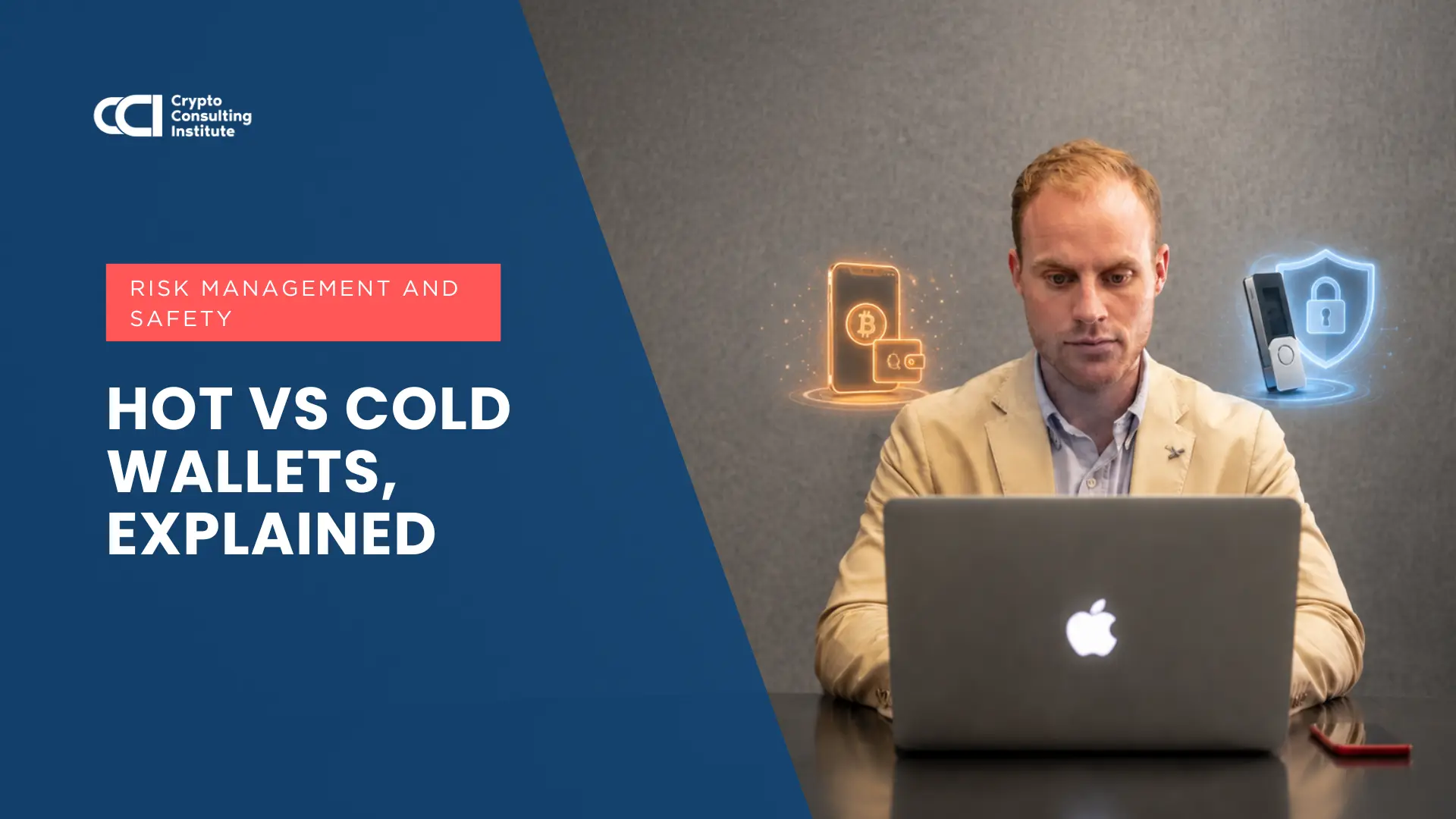
A hot wallet is a crypto wallet connected to the internet, and a cold wallet is one that stores your keys offline. The simplest way to think about it: hot wallets prioritise convenience, cold wallets prioritise security. Most sophisticated investors use both, for different purposes.
What is a hot wallet?
A hot wallet is a software based wallet that runs on a device connected to the internet. Mobile wallets, browser extensions, desktop wallets, and the wallets built into exchanges all qualify as hot wallets.
Because they are online, hot wallets allow fast access to funds, easy interaction with applications, and convenient sending and receiving. That same connectivity also makes them more exposed to threats such as malware, phishing, compromised browser extensions, and device level attacks.
Hot wallets are well suited to:
- Small balances used for everyday activity
- Interacting with on chain applications
- Active trading positions
- Funds you would not be devastated to lose
What is a cold wallet?
A cold wallet stores your private keys on a device that is not connected to the internet. The most common form is a dedicated hardware wallet: a small physical device that signs transactions internally and never exposes the keys to the online environment.
Because the keys remain offline, cold wallets are highly resistant to remote attacks. To compromise one, an attacker typically needs physical access to the device and either the PIN, the seed phrase, or a sophisticated supply chain attack. For most investors, that level of protection is more than sufficient.
Cold wallets are well suited to:
- Long term holdings
- Larger balances
- Assets you intend to hold across a market cycle
- Any position you do not need to access frequently
Key differences at a glance
The core trade off is the same in every case: convenience versus security.
- Connectivity: hot is online, cold is offline
- Speed of access: hot is instant, cold is deliberate
- Security: hot is moderate, cold is high
- Cost: hot is typically free, cold requires a hardware purchase
- Best use: hot for activity, cold for storage
How sophisticated investors use both
A common and sensible approach is to think of your wallets like a bank account and a vault. Your hot wallet is the everyday account: small balances, regular movement, fast access. Your cold wallet is the vault: larger balances, infrequent access, maximum protection.
Funds move from the cold wallet to the hot wallet when you intend to use them, and back again once activity is complete. This habit alone removes a significant portion of the risk that catches less experienced investors off guard.

Buying a cold wallet safely
Always buy directly from the manufacturer or an authorised reseller. Never buy a hardware wallet from a marketplace such as eBay or from an unfamiliar third party. Tampered devices are a documented threat, and the small saving is not worth the risk.
When you receive the device, set it up yourself. The seed phrase must be generated on your device, by you, and recorded in your handwriting on the included recovery card.
Common mistakes to avoid
- Storing large amounts on an exchange because it feels easier
- Using a hot wallet for long term holdings
- Photographing or screenshotting the seed phrase
- Storing the seed phrase in cloud notes, emails, or password managers
- Buying hardware wallets from unverified resellers
- Sharing the seed phrase with anyone, ever, for any reason
The mindset behind smart custody
Wallet choice is not a technical detail. It is a reflection of how seriously you take your crypto. The sophisticated investor treats custody as part of their edge, not an afterthought.
At CCI, we walk every client through custody decisions as part of building a complete investing foundation. The right setup depends on your balance, your activity level, and your risk tolerance, but the underlying principle is universal: protect what you have built.